

What Commercial Buyers Should Look For When Choosing Quality Indoor Playground Equipment
If you’re researching a new soft play or indoor playground, you’ve probably come across manufacturers from all over the world.
So, does it actually matter whether your equipment is made in the UK, the USA or overseas?
Sometimes. But not for the reason you might think.
UK-made equipment isn’t automatically better, just as imported equipment isn’t automatically poor quality.
The important questions are how the manufacturer makes the equipment, what materials they use, and what support they provide after installation.
That matters even more when you’re investing in a commercial indoor playground, play center, farm attraction, holiday park, leisure venue or other high-traffic environment.
A piece of equipment that looks great on day one isn’t necessarily going to look or perform the same after thousands of children have used it.
So, before comparing manufacturers based on location or price, here’s what you should actually be looking for in a quality indoor playground manufacturer.
What Makes Quality Indoor Playground Equipment
If you’re comparing indoor playground manufacturers, there are several things worth looking at before you compare prices or start worrying about whether something is UK-made.
Materials
Commercial indoor playground equipment gets used a lot. Children climb on it, jump on it and the general wear and tear is a lot more than equipment in a home environment.
Therefore, the materials need to be appropriate for the job.
Look beyond the overall appearance and ask what the equipment is made from. Foam density, vinyl quality, stitching and other components can all affect how a playground performs over time.
This is relevant to components that are repeatedly compressed or exposed to friction. A piece of soft play equipment can look perfectly good when it’s first installed but show considerably more wear after several years of daily use.
Manufacturing
Some manufacturers build playground equipment from standard, off-the-shelf designs. Others manufacture each project specifically for the individual venue.
There isn’t necessarily anything wrong with an off-the-shelf product. But when you’re investing in a major commercial installation, ask how much control your manufacturer actually has over production.

Hand manufacturing can give manufacturers more opportunities to spot inconsistencies during production. It can also make unusual shapes, sizes and finishes easier to produce than standardized components allow. That level of control can make a real difference to soft play manufacturer quality, particularly on large commercial projects.
The important thing isn’t whether something is handmade for the sake of saying it’s handmade. It’s whether the manufacturing process gives the manufacturer enough control to consistently produce the equipment being promised.
Design
A good indoor playground needs to do more than fit inside a building.
Your manufacturer should design the playground around how people will actually use the space, including customer flow, age ranges, supervision, accessibility, capacity and the relationship between the play area and the rest of the venue.
This becomes particularly important with bespoke projects.
An off-the-shelf structure may technically fit the available space, but it may not make the best use of it. You could end up having to position seating, entrances or other parts of your business around the playground.
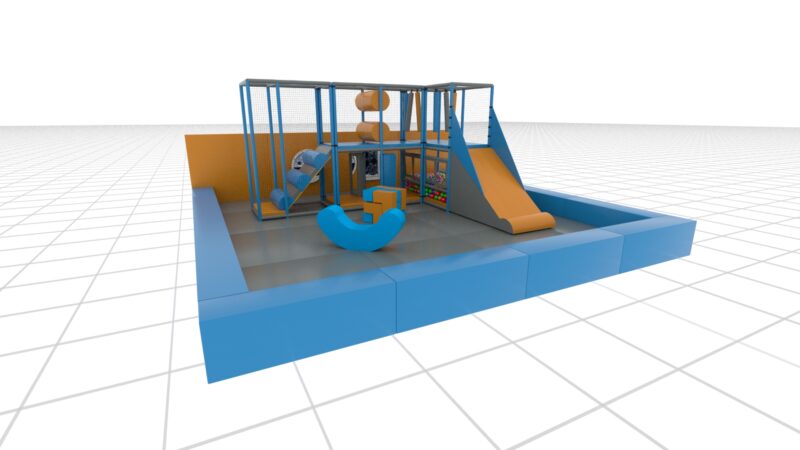
A properly considered design works in the opposite direction: the soft play manufacturer designs the play area around the building and the way your business operates.
Installation
Installation is sometimes treated as the final step of a playground project, but it can have a significant impact on the finished result.
Commercial indoor playgrounds contain hundreds of individual components, and the installation team must assemble them correctly and securely on site.

The finished building can also differ from the original plans. Ceiling heights, structural elements, services and other site conditions don’t always cooperate with the original design.
What Happens Afterwards?
No commercial playgrounds will remain completely untouched forever.
Parts can become damaged, materials can wear and individual components may eventually need attention. What matters is how the manufacturer deals with that when it happens.
Before buying, find out:
- What does your warranty cover?
- How will your team assess damaged components?
- Can you repair individual parts?
- Can you manufacture replacement components?
- Who carries out the repair or replacement?
- Will you still be able to supply replacement parts several years after installation?
A manufacturer that can repair or reproduce its own components has more options than a business relying entirely on third party or discontinued parts.
It’s also worth asking whether the manufacturer records recurring issues and uses them to improve future designs. A problem shouldn’t necessarily just result in a replacement; it can also provide useful information about how the equipment performs in the real world.
What Does Soft Play Manufacturer Quality Actually Mean?
When you’re comparing soft play manufacturer quality, don’t stop at where the company operates. Look at how much control it has over design, manufacturing, installation and aftercare.
A UK soft play manufacturer can offer a more direct connection between the people designing your playground and the people manufacturing it. The benefit of working with a UK soft play manufacturer isn’t simply that the equipment has a British label on it.
The potential advantage is control.
When design, manufacturing and installation are handled closely together, there are fewer layers between the customer and the people actually creating the equipment.
That can make a difference when you need something changed, repaired or replaced. It can also make a difference when you’re commissioning a bespoke project.
At Play Creations, the process can run from initial design through manufacturing and installation, with the majority of the equipment produced in-house.
For a commercial buyer, that means there is a direct connection between the people designing the playground and the people manufacturing it.
For US buyers considering a UK manufacturer, this is particularly worth investigating. Don’t just ask where a company is based. Ask who manufactures the equipment, where the components come from, and who will be responsible if something needs changing later.
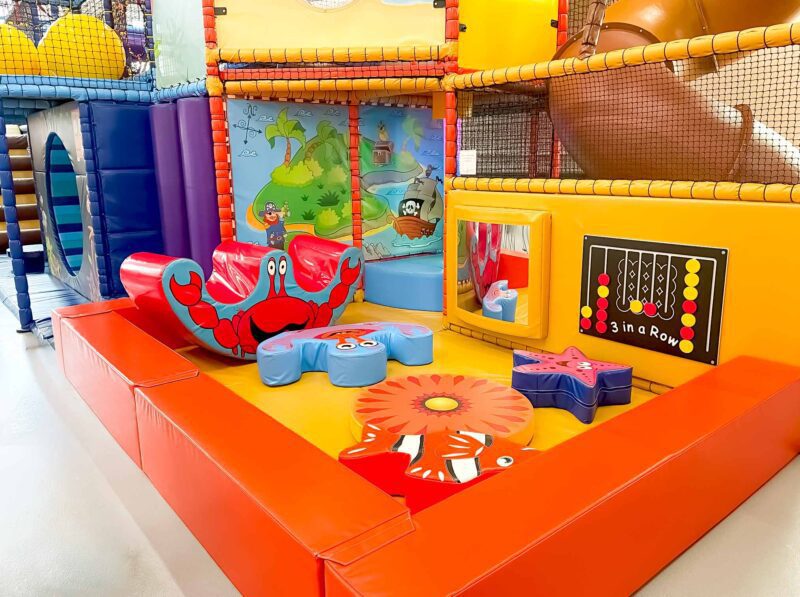
Does Imported Mean Lower Quality?
No.
But made in Britain soft play isn’t automatically higher quality either.
The difference comes from the materials, manufacturing process, design, installation and aftercare behind the product.
Imported equipment can be perfectly suitable for certain applications.
If you’re buying an indoor playground for your home, for example, it will usually experience very different levels of use from a commercial play center welcoming hundreds of children every week.
Likewise, a smaller business adding a play area as an additional feature may not have the same requirements as a dedicated indoor playground or large family entertainment center.
The important distinction is whether the equipment is appropriate for the environment in which it will be used.
High-traffic venues need equipment that can withstand constant commercial wear and tear.
Something that appears inexpensive at the point of purchase can become considerably more expensive if it requires frequent replacement parts, specialist repairs or premature refurbishment.
That’s why the initial purchase price shouldn’t be the only number you consider.
Look at the whole life cost of the equipment.
How Long Should Commercial Soft Play Last
There isn’t one lifespan that applies to every indoor playground.
How long equipment lasts will depend on its materials, construction, level of use, maintenance and the environment it operates in.
One of the clearest ways to judge play equipment is to look at how it performs after several years of real-world use.
Play Creations completed Hemsworth Methodist Church’s soft play in 2021, and it remains operational today. The installation has only needed minor repairs over five years, and the equipment still looks remarkably close to its original condition.
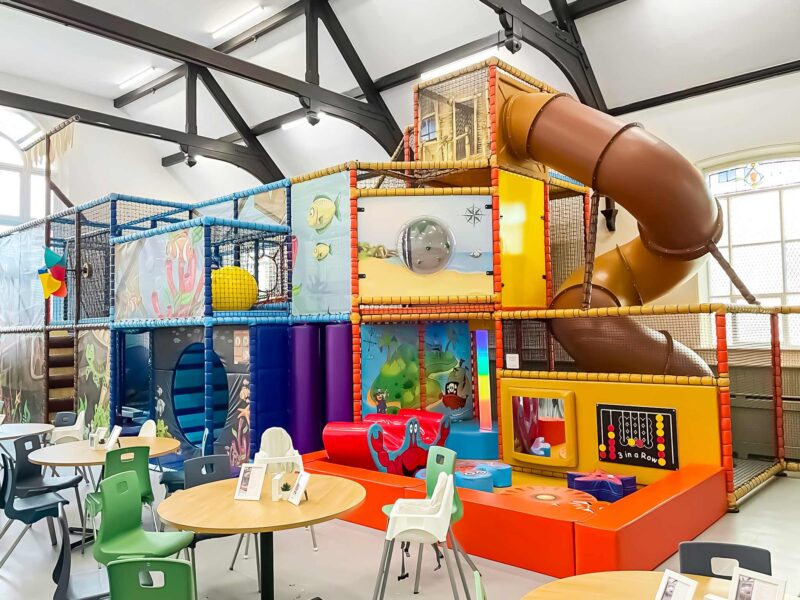
If you’re researching a manufacturer, ask to see some of their older projects. Find out:
- How old are the installations?
- Are they still operating?
- What maintenance have they required?
- Have major components needed replacing?
- How have the materials held up under commercial use?
A manufacturer’s newest project will always look impressive.
Their older projects can tell you much more about how they actually build.
UK-Made vs Imported: Which Should You Choose?
There isn’t a universal answer.
The right choice depends on how the equipment will be used, what you’re expecting it to achieve and what support you need after installation.
| Use | What matters most |
|---|---|
| Home | Safety, suitability, value |
| Light commercial use | Materials, maintenance, suitability |
| High-traffic commercial use | Durability, manufacturing quality, design, installation, repairability |
You’re not simply buying slides, climbing frames and padding. You’re investing in an environment that your business may rely on for years.
That’s why the initial purchase price should only be one part of the decision.
Planning a Commercial Indoor Playground?
Play Creations designs and manufactures bespoke commercial soft play and indoor playground equipment in the UK, from toddler areas to large multi-level installations.
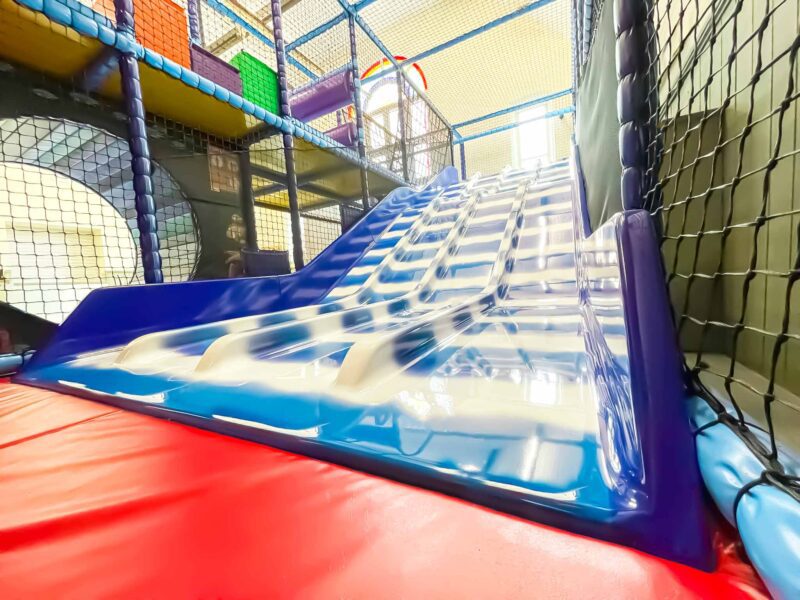
Our team handles design, manufacturing and installation in-house to create play spaces around the venue, rather than asking the venue to work around an off-the-shelf structure.
Looking to bring a UK-made indoor playground to the USA? Explore our USA Services
Frequently Asked Questions
We’ve pulled together the most common things people ask us, from how we work and what to expect, to timelines, pricing, and everything in between. If you can’t find what you’re looking for, just reach out and we’ll get you sorted.
Look at more than the commercial designs in their portfolio. Find out where the equipment is manufactured, what materials are used and who installs it.
A good manufacturer should explain how their equipment is designed, rather than just showing you a catalogue of finished products.
Commercial soft play costs vary depending on the size of the play area, design complexity and equipment used.
It’s also important not to compare quotations based purely on price. A cheaper installation may become more expensive over time, particularly if installation isn’t included in the initial quote.
For a more detailed breakdown, take a look at our guide to commercial soft play costs.
A UK manufacturer can supply commercial indoor playground equipment to US buyers, but there are additional considerations. US buyers should find out who is responsible for shipping, installation, safety standards and repairs for the playground.
If you’re considering a UK manufacturer for a US project, we’ve put together a more detailed guide for shipping indoor playground equipment to the USA.
Commercial soft play needs to be designed and manufactured with safety requirements in mind, but the exact standards depends on where the equipment is.
UK: BS EN 1176 and BS EN 1177
USA: ASTM F1487 and ASTM F1918
Find out more about how we meet USA safety standards.
Before requesting a quote, have a clear idea of the space available, intended age range and expected usage. Ask the manufacturer about materials, installation, warranties and maintenance.
You can also use our commercial soft play buyer’s guide when you’re researching your options.


